 ¡Bienvenidos!
Welcome to our travel guide www.cayosantamaria.info, online since 2001.
Click to visit the first version of our website. This is the second that we have created from our collection of websites dedicated to Cuban tourist destinations.
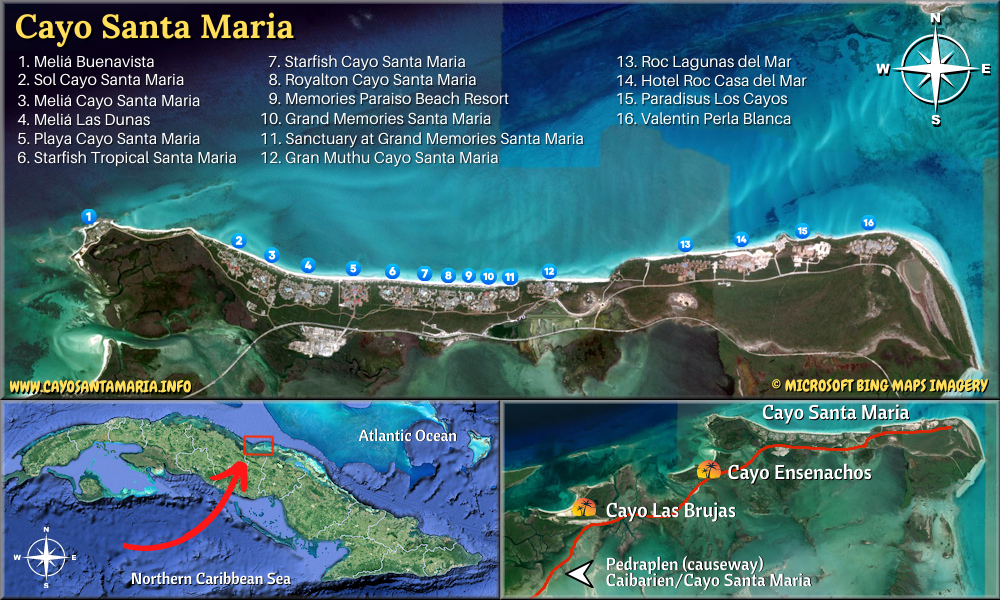
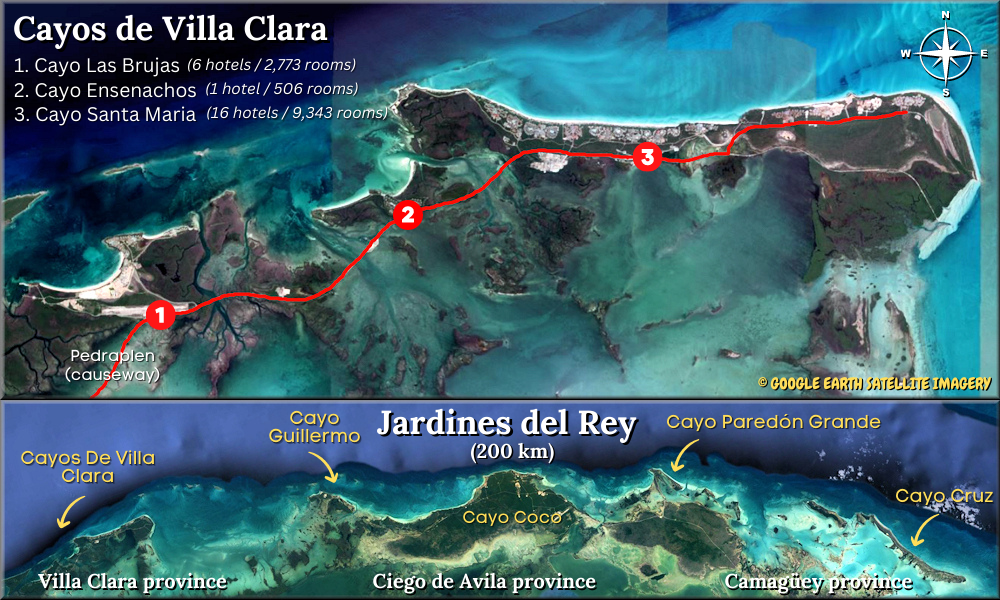 CAYO SANTA MARIA is a small key, 16 km (10 mi) long by 2 km (1.2 miles) wide, located in the Bahia de Buena Vista, off the northern coast of the main island of Cuba, in the province of Villa Clara. With its two neighbors, Cayo Las Brujas and Cayo Ensenachos, they together form a quiet resort destination with stunning beaches called "Los Cayos de Villa Clara". These cayos (keys) are connected to the main island of Cuba by a 48-km (30-mi) causeway Pedraplen, from the coastal town of Caibarien.
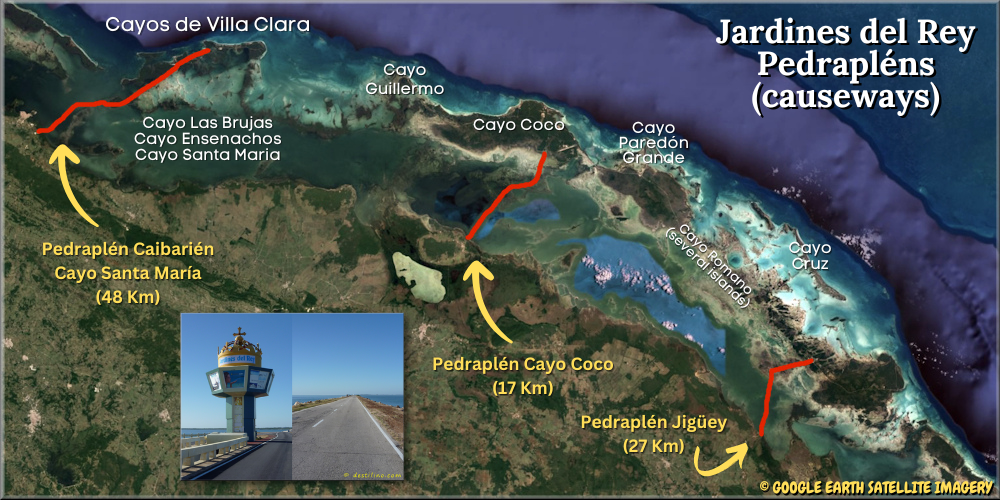
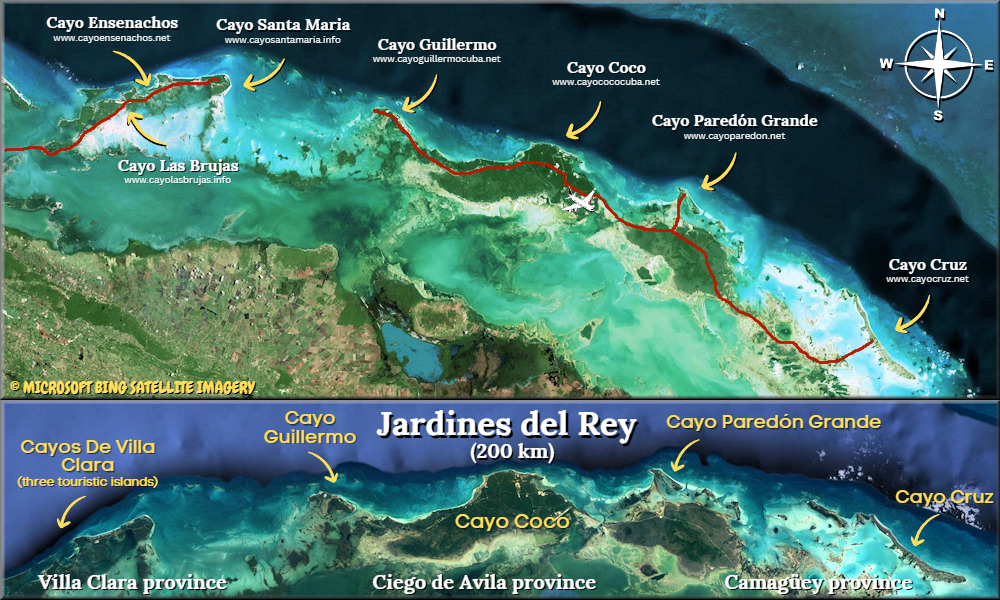
The ‘Cayos de Villa Clara’ are part of a much larger archipelago called Jardines del Rey (King's Gardens), which is currently the most active area in Cuba for tourism development. Once completed, the archipelago should reach a capacity of more than 32,000 rooms distributed in the following islands (from west to east): Cayo Las Brujas, Cayo Ensenachos, Cayo Santa Maria, Cayo Guillermo, Cayo Coco, Cayo Paredon Grande, Cayo Cruz and maybe others to come. This King's Gardens could thus eventually become the largest beach destination in Cuba by number of rooms, surpassing Varadero.
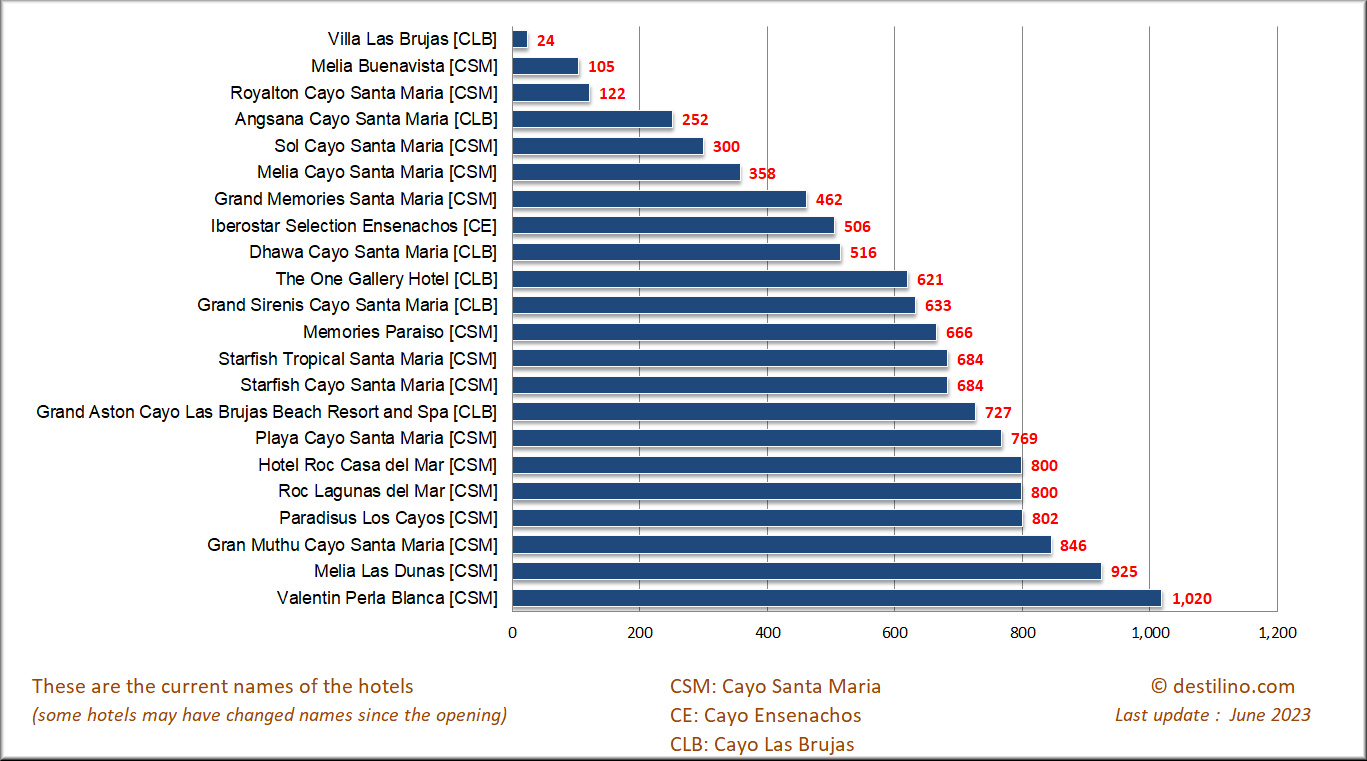
The three "Cayos de Villa Clara" (Cayo Santa Maria, Cayo Las Brujas and Cayo Ensenachos) alone should reach more than 12,000 hotel rooms. Tourism development started on Cayo Las Brujas in 1999, followed by Cayo Santa Maria (first all-inclusive resort in 2001) and Cayo Ensenachos in 2005. Hotels vary greatly in size, from 24 rooms up to 1,020 rooms, click here to view a Chart of the number of rooms per hotel.
Click this link for a detailed Chronology of tourism development in the Cayos of Villa Clara.
Click the following links to view maps:
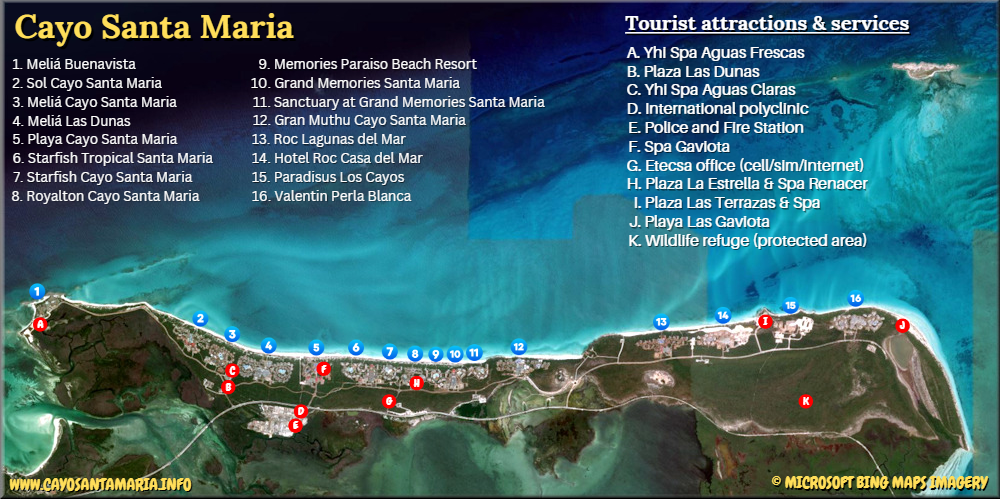
On Cayo Santa Maria, the location of Hotels and Tourist attractions & services
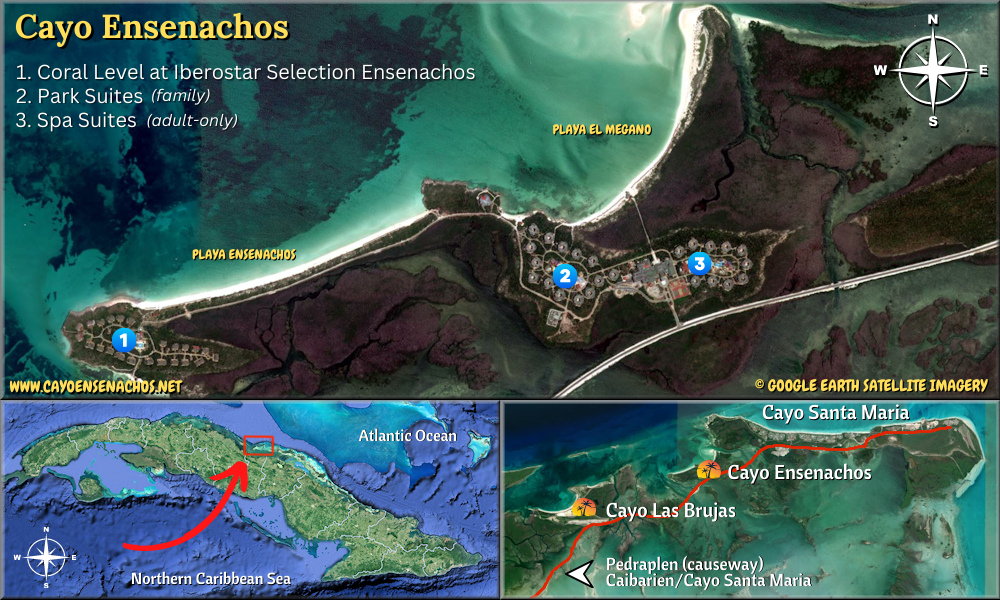
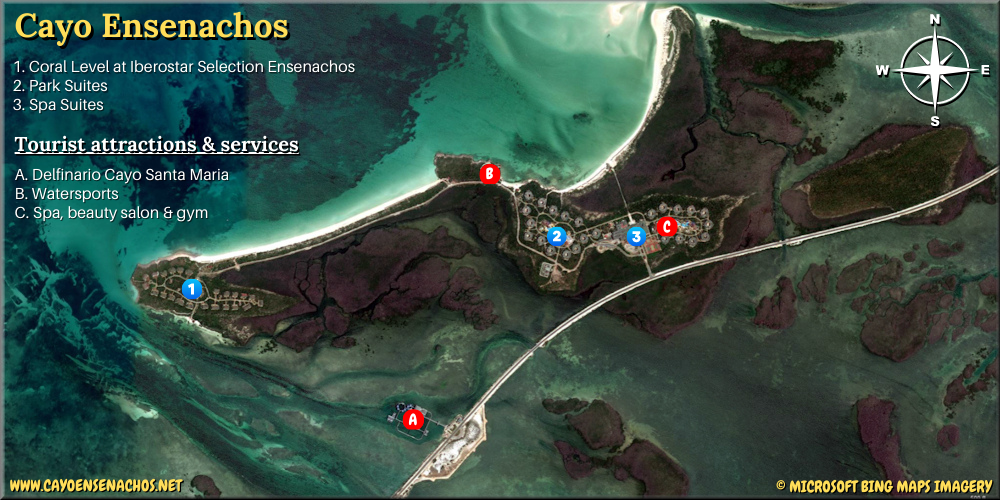
On Cayo Ensenachos, the location of Hotel and Tourist attractions & services
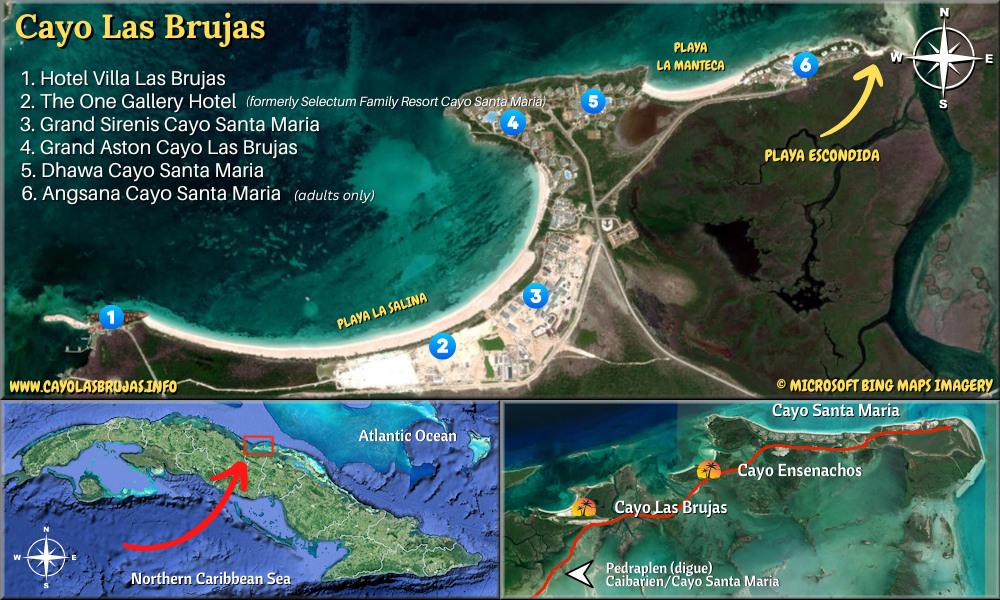
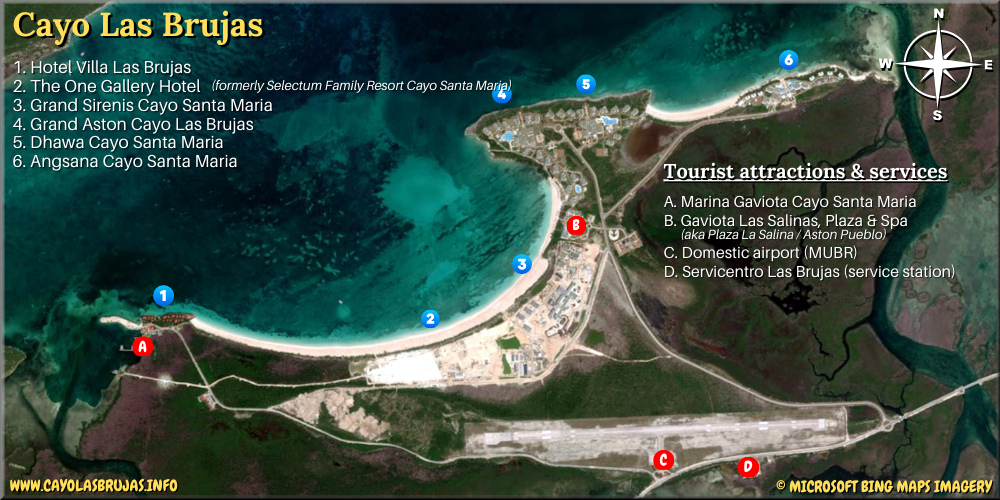
On Cayo Las Brujas, the location of Hotels and Tourist attractions & services
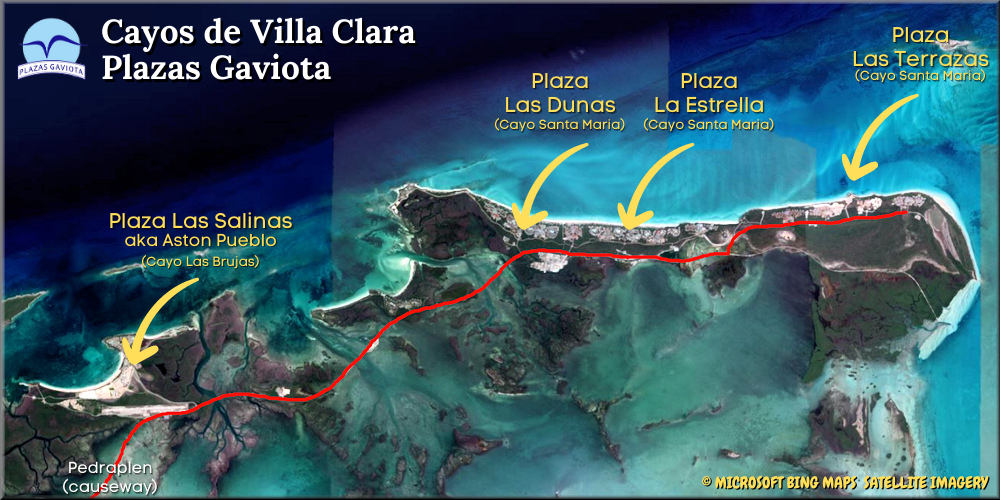
The location of all Plazas (commercial & entertainment centers)
Aerial video tour of the 'Cayos de Villa Clara'
Click to see current and previous management of all hotels in the Cayos de Villa Clara since 1999
Cayo Santa Maria is part of the Villa Clara province but is located only about 30 km (18.6 mi) as-the-crow-flies west from Cayo Guillermo and Cayo Coco, two other popular beach destinations in the nearby province of Ciego de Avila. Learn more about the other islands of: Jardines del Rey.
Cayo Santa Maria has no permanent residents (no villages, no cities, no farms). Hotel employees come to work by bus from the surrounding towns on the main island, such as Caibarién, Remedios, Camajuani and Santa Clara.
 Cayo Santa Maria's main attraction is without a doubt its 13 km (8 mi) of gorgeous fine sand beaches, divided in three sections. The beaches and hotels are all located along the northern coast of the island, while the south coast is mainly dominated by forests, salt marshes and mangroves.
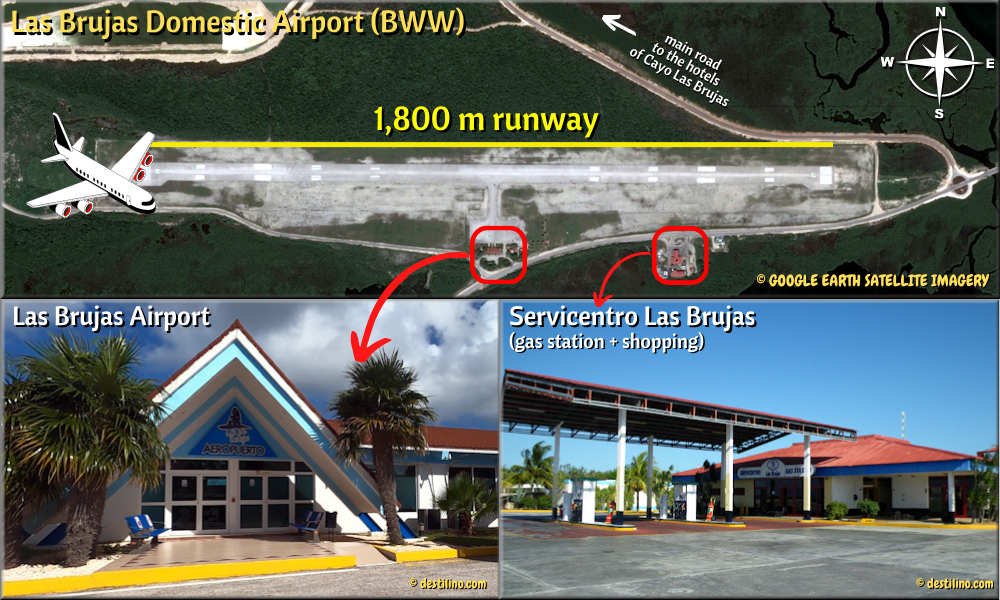
The 'Cayos de Villa Clara' are served by the Santa Clara International Airport, called Aeropuerto Abel Santamaria (code SNU). On Cayo Las Brujas (right next to Cayo Santa Maria), there’s a small local airport for domestic flights; unfortunately its runway is too short to accommodate large aircrafts.
With the nearest international airport being located in Santa Clara (the capital of the province of Villa Clara), it takes about 90 minutes by road to reach Cayo Santa Maria; the first 60 minutes or so is through the Cuban countryside and the towns of Remedios, Camajuani and Caibarien, and the last 30 minutes on the causeway (Pedraplen) with the sea on both side. There is a project to build an expressway to join the pedraplen in about 30 minutes, which would make it possible to reach the cayos in less than an hour in total. Note. however, that the current 90-minute ride is not monotonous, quite the contrary; this gives the opportunity to visit the region a little and admire the scenery. Besides, a local guide accompanies each bus transporting tourists to the cayos, he/she describes what we see along the way and talks about the history of the region, the local industry, and Cuba in general.
About the causeway (pedraplen): This colossal project was the work of the company "Campaña de Las Villas". The construction began in 1989 and was completed in 1999, paving the way for the development of mass tourism in this region. It’s on September 12th, 1989 that former president Fidel Castro, while visiting the area, officially assigned the team that would undertake this great project, and it's on December 15, 1989 that the first stone was tossed into the sea. One of the top priorities was to preserve the environment with the construction of several openings (bridges), 46 in total for a total length of 2,298 meters (7539 ft.) of bridges, allowing an uninterrupted flow of ocean currents to minimize damage to the ecosystem of the archipelago. The work received international recognition, including an award in 2001 for its high economic contribution combined with a minimum impact on the environment.
Our cayosantamaria.info website has been online since 2002. It contains thousands of pictures and hundreds of webpages. It’s updated regularly, and we humbly believe that it's the most complete and detailed source of information about this Cuban destination. Having no business relationship (or otherwise) with any hotel chain or the Cuban government, our websites are created simply and solely for the purpose of keeping you informed about this beautiful Caribbean island that we had the chance to visit dozens of times. Enjoy you visit!
Lily & Normand
© cayosantamaria.info
© destilino.com